

Vision Statement & Scope Specs
Context
This project focused on building an AI powered Virtual Assistant for the TreeRing Yearbook platform to streamline support, reduce friction and elevate the overall user experience. The goal was to design a scalable, user centered assistant that could grow with the product and support multiple user flows from basic help to more advanced context aware interactions. I led the design, UX strategy and technical planning while collaborating closely with product, engineering and stakeholder teams.
Problem
-
Many users struggled to find information or complete simple tasks because navigation and help resources were unclear.
-
Support agents were overwhelmed with repetitive questions which raised operational costs and slowed response times.
-
There was no efficient self service option which affected user satisfaction and added pressure to support teams.
Problem Framing & User Scenarios


Service Blueprint For AI Integration
Why It Matters
Without a better support system, user frustration and inefficiency were likely to grow and support costs would continue to rise. The lack of a unified help experience limited long term scalability especially during busy periods. Designing an AI assistant created an opportunity to reduce support load, improve user satisfaction and introduce a modern, scalable support layer that benefits the entire platform.
My Role & What I Did
-
Conducted discovery by reviewing support logs, mapping user flows and identifying common pain points.
-
Researched available AI assistant approaches including in house, hybrid and outsourced solutions to understand cost, speed, flexibility and scalability.
-
Defined the assistant system architecture including the conceptual framework, response logic, contextual layers and sentiment handling using both UX and technical thinking.
-
Designed conversational flows, wireframes and prototypes that support natural language interaction and reduce user friction.
-
Presented findings and direction to engineering, product and stakeholder teams to create strong alignment.
-
Created a phased roadmap outlining the initial launch version along with future enhancements and long term growth opportunities.
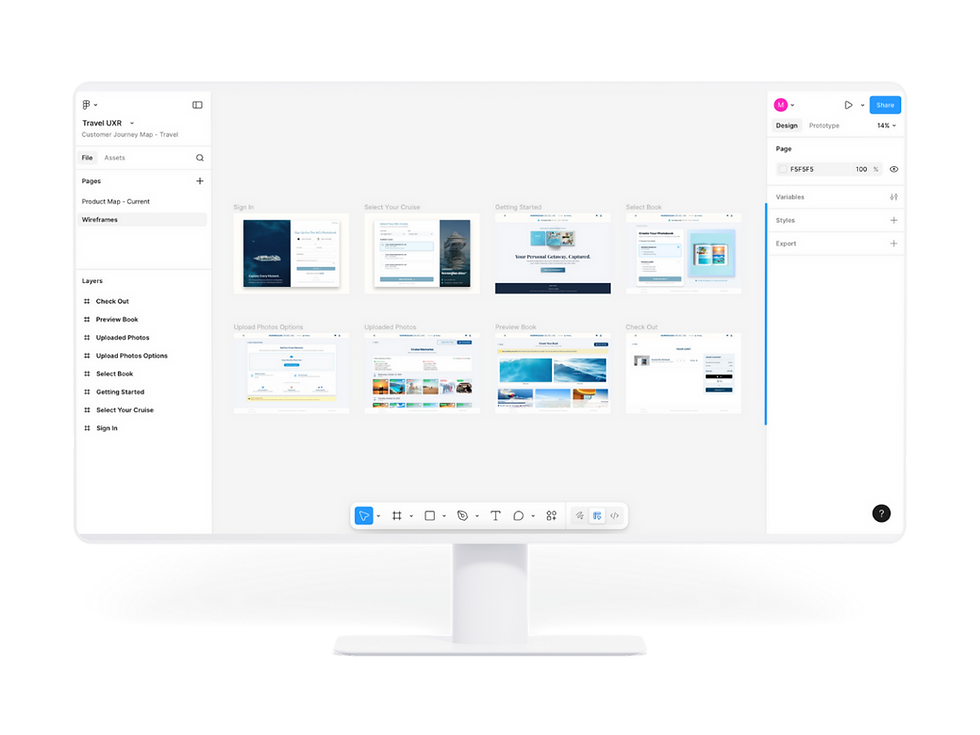
Figma Components Library

Development Handoff Requirements
Key Decisions & Strategic Moves
-
Selected a flexible model that delivered value quickly using existing AI technology while preserving room for future custom development.
-
Designed the assistant to understand natural language and context rather than relying on rigid button based interactions.
-
Focused on scalability and cross team clarity so the assistant could support product growth and remain maintainable over time.
Visuals, Technical Documentation, & Research
-
Framed the problem using prior research and identified AI opportunities to create a clear understanding of scope and expected outcomes within the defined project timeline.
-
Built alignment across teams by developing service blueprints, establishing the reason codes directory and crafting a clear vision statement that guided solution decisions.
-
Created high fidelity mockups and a full prototype and annotated each wireframe to explain AI requirements, UX decisions and technical considerations.
-
Drafted empty and fallback state diagrams to communicate expected user behavior and system responses across edge cases and scenarios for development teams.
-
Outlined the basic API contracts documentation to clarify how the product defines the structure and outputs of the endpoints for development and product management.
-
Completed the interaction rules documentation and the template JSON specifications at both a technical level and a stakeholder friendly level.


Development Handoff Requirements
Guardrail Specs & Empty/Fallback States
API Curation Diagram

Impact & Expected Benefits
-
Reduced support burden by directing routine questions to the assistant which allowed support agents to focus on higher value work.
-
Improved the user experience by making information faster and easier to access.
-
Established a scalable foundation for future AI driven features and automated workflows.Provided a clear AI direction for product and engineering teams which strengthened company wide alignment and long term planning.
Want to get in touch? Chat? See pictures of my dog?


