

Compeitive Analysis and AI Market Strategy Report
Context
This project focused on defining a new opportunity for TreeRing to expand into the fast growing travel memory market by creating a smarter, AI enhanced photobook experience. Travel is one of the most emotionally meaningful categories for users, yet existing tools struggle to turn large, unorganized photo collections into clear and compelling stories. Recognizing this gap, I led a comprehensive competitive and UX analysis to understand where the market falls short and how generative AI could unlock a more intuitive, automated, and storytelling driven experience. This work established the strategic foundation for a next generation travel photobook product that aligns with user needs, business goals, and the future of AI powered consumer design.
Problem
-
Users struggle to turn large and unorganized travel photo collections into meaningful stories because current tools lack context, guidance, and narrative structure.
-
Most platforms rely on basic automation and offer limited support for travel specific elements such as maps, routes, locations, and timelines, which results in flat and generic photobooks.
-
There is no real time AI assistant to help users make layout changes, rewrite captions, translate content, or personalize their book through natural language guidance.
-
Social media integration is minimal, making it difficult for users to import the photos and stories they actively share on platforms like Instagram and TikTok.
-
Existing tools fail to balance automation with creative freedom, leaving users either overwhelmed by manual editing or constrained by rigid templates.

Compeitive Product Maps With AI Integrations

Journey Maps of Product Variations and Tiers
Why It Matters
Travel is one of the most emotionally meaningful and high value categories in photo creation, and users are actively seeking faster and smarter ways to turn their photos into polished stories. By delivering an AI powered, travel aware photobook experience, TreeRing can meet a growing user need while opening new revenue streams across consumer, partner, and enterprise markets. This positions the company to differentiate itself with capabilities competitors do not offer and to capture a rapidly expanding segment of the memory creation space.
My Role & What I Did
-
Led the competitive analysis and UX audit, translating key market gaps into a clear AI-driven product strategy.
-
Defined the vision for a next generation travel memory experience, including metadata driven storytelling, real time AI assistance, and predictive personalization.
-
Evaluated business requirements for both consumer and enterprise segments to ensure the solution aligned with TreeRing’s long term growth strategy.
-
Created a structured, phased roadmap that balanced feasibility, user needs, and AI innovation to guide future design and development.
-
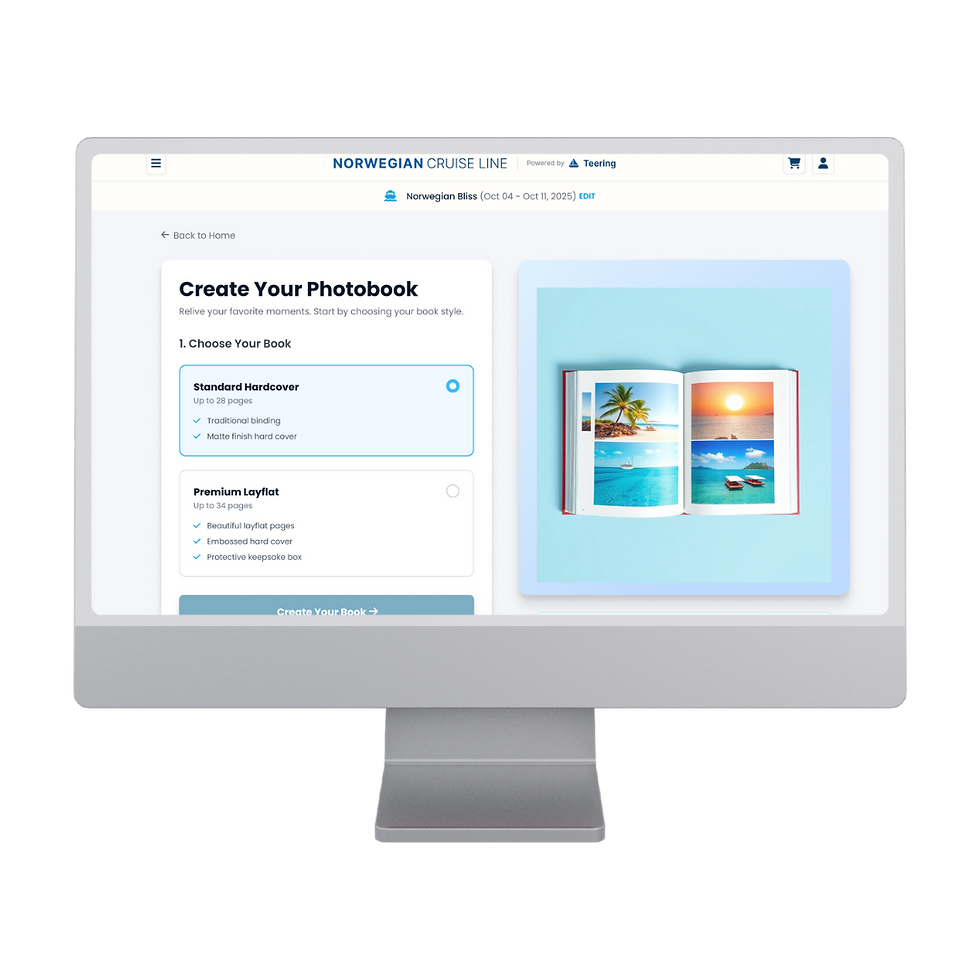
Proposed a modernized and refreshed UI direction to reduce friction, improve clarity, and better support future AI powered features.
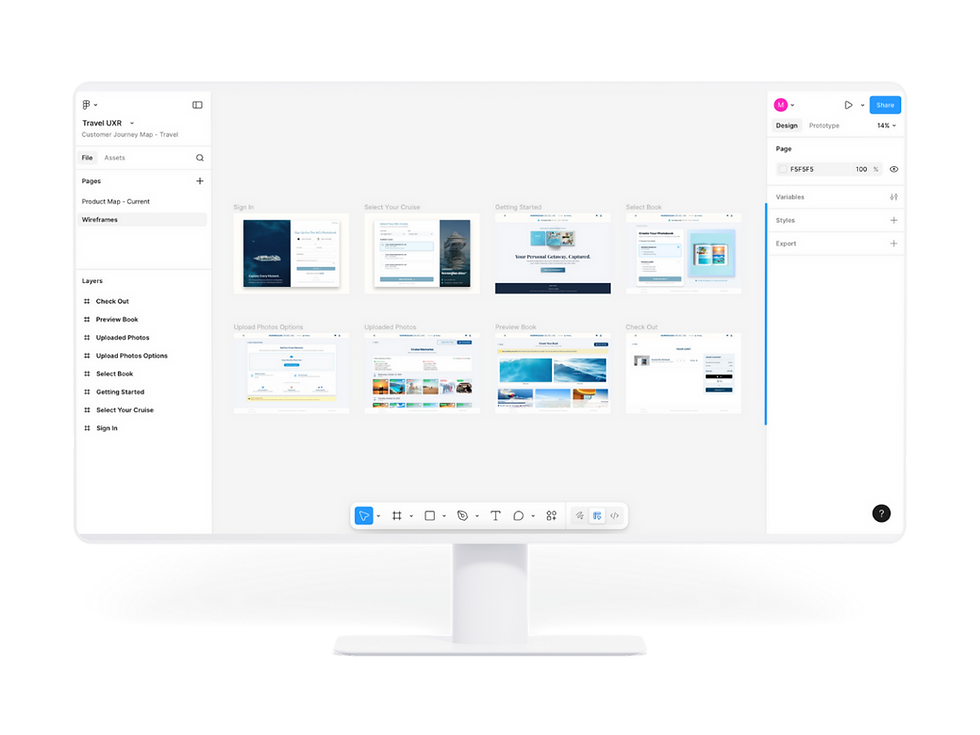
First Figma Iteration

AI Image Selection and Enhancement
Key Decisions & Strategic Moves
-
Prioritized a hybrid product model that blends fast automation with optional creative control, enabling TreeRing to support both individual users and enterprise partners.
-
Positioned generative AI as a core design collaborator rather than a backend utility, introducing opportunities for real time assistance, narrative creation, and personalized storytelling.
-
Structured a phased rollout strategy focusing first on foundational automation, then travel aware storytelling features, and finally advanced AI interaction to ensure scalability and measurable impact.
Visuals, Technical Documentation, & Research
-
Recreated the current experience to expose usability constraints and connect them directly to research insights which uncovered a new opportunity and direction for building the intelligent virtual assistant.
-
Evaluated multiple AI assistant models including in house, hybrid and fully outsourced solutions and assessed their strengths and tradeoffs which allowed the team to choose an approach that balanced speed, cost and long term scalability.
-
Researched and selected the right tools for each stage of the assistant, documenting costs, limitations and decision criteria to guide engineering and leadership.
-
Defined the capabilities and limitations of the assistant by creating the conceptual framework, response logic structure, contextual layer and sentiment handling flow which ensured the system aligned with real user frustrations and product goals.
-
Designed the visual direction and the full set of user interactions that shape how people engage with the assistant across the platform.
-
Built the foundation for a scalable AI assistant and created a complete version based roadmap that supports ongoing growth, iteration and future product innovation.

Current VS Redesign Strategy UI Notes
Impact & Expected Benefits
-
Positions TreeRing to expand into a high value travel memory market, unlocking new consumer revenue streams and scalable enterprise partnerships.
-
Gives users a faster, smarter, and more intuitive way to turn unorganized travel photos into meaningful stories, increasing satisfaction and long term engagement.
-
Differentiates TreeRing from competitors with AI powered storytelling, real time assistance, and travel specific features that elevate both the creative process and final product.
-
Reduces support costs and creation friction by automating complex steps such as photo curation, layout decisions, caption writing, and story structure.
Want to get in touch? Chat? See pictures of my dog?


